Oil prices slipped on Friday but remained on track for a modest weekly increase, as traders weighed softer U.S. fuel demand at the close of summer against ongoing uncertainty over Russian supply.
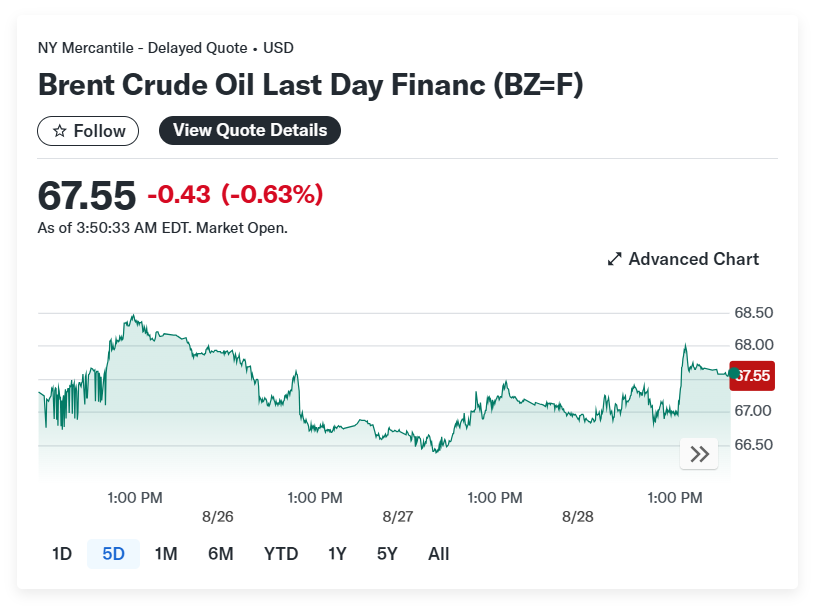
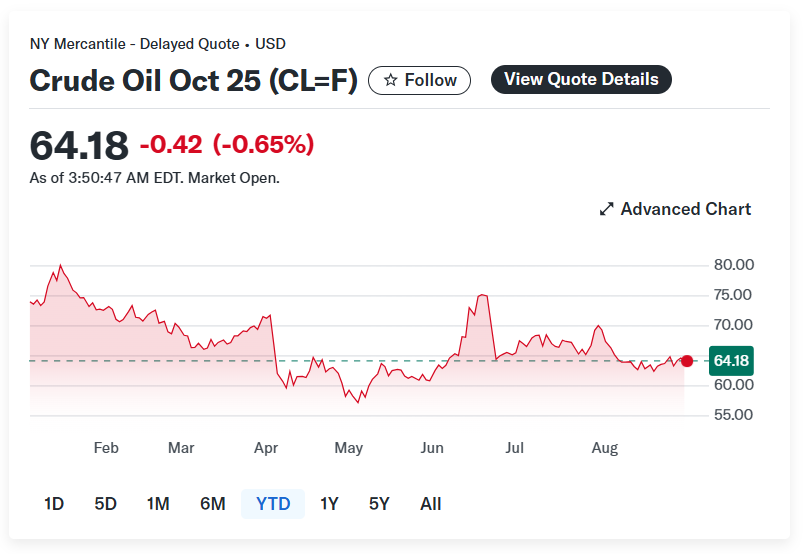
October Brent crude, expiring Friday, declined 39 cents (0.6%) to $68.23, while the more actively traded November contract fell 38 cents to $67.60. U.S. benchmark West Texas Intermediate (WTI) dropped 39 cents, also 0.6%, to $64.21.
For the week, Brent is poised to gain 0.6% and WTI about 0.8%. Earlier support came from Ukrainian strikes on Russian oil export hubs and remarks from German Chancellor Friedrich Merz ruling out a meeting between Vladimir Putin and Volodymyr Zelenskiy.
Still, the end of peak U.S. driving season with Monday’s Labor Day holiday, along with the gradual return of supply as producers ease voluntary cuts, has capped momentum.
“Rising OPEC+ production and seasonally weaker refining runs from September will likely push global oil inventories higher in coming months. We project Brent falling to around $63 per barrel in Q4 2025,” said Vivek Dhar, commodities strategist at Commonwealth Bank of Australia.
Concerns of further escalation linger after Russian missile strikes on Kyiv killed 23 people Thursday, prompting speculation about tougher Western sanctions.
“Markets remain cautious as investors assess the possibility of additional U.S. or European sanctions against Russia and the effects of Washington’s new tariffs on India,” said Hiroyuki Kikukawa, chief strategist at Nissan Securities Investment.
The U.S. recently doubled tariffs on Indian imports to as high as 50%, raising pressure on New Delhi to curb purchases of Russian crude. Nevertheless, traders report Russian shipments to India are expected to climb in September.
Meanwhile, Saudi Arabia may reduce October crude prices for Asia in response to softer demand and plentiful supply, according to refining sources.
In Eastern Europe, Russian oil deliveries through the Druzhba pipeline to Hungary and Slovakia have resumed following a brief disruption caused by a Ukrainian strike inside Russia last week, Hungarian oil company MOL and Slovakia’s economy minister confirmed.